
So to break it down, if you’ve recently gone self-employed, started earning extra income outside of work, rented out property, or had a change in circumstances, it may be time to apply for Self-Assessment. And, in most cases, HMRC won’t be in touch to let you know.
Read this blog to understand when you should start thinking about Self-Assessment, when to apply, and which key deadlines to watch out for.
Looking for personalised advice? Contact Polaris Accounting.
Who needs to file a Self-Assessment tax return?
A Self-Assessment tax return helps HMRC figure out how much tax you owe when they can’t take it from your pay automatically. So, if your income isn’t fully handled by your employer through PAYE (Pay As You Earn), you’ll usually need to fill out a Self-Assessment tax return.
This applies if you’re
- Self-employed or freelancing (even if it’s just a side hustle or only part of the tax year)
- A landlord earning rental income (UK or overseas)
- A high earner with a total income over £150,000
- Earning additional income outside your main job (for example, consulting, online sales, or freelance work)
- Receiving income from investments, dividends, or savings
- Receiving child benefit while earning over £60,000
- Earning income from overseas or dealing with more complex tax affairs
- A company director
When should you inform HMRC about your Self-Assessment?
If you need to file a tax return and HMRC hasn’t sent you a notice already, you must inform HMRC yourself. You can do this by registering for Self-Assessment by 5 October, after the tax year your income was received, but it’s always best to do it ASAP.
You can register online via the HMRC website, or in some cases by post or telephone.
Once you’re all set up, HMRC will issue you with a Unique Taxpayer Reference (UTR) so you can access your account and start completing your return. Keep this number safe, as you’ll need it to access your tax records and file future tax returns.
What happens if you don’t tell HMRC you need to file a tax return?
This is where things can snowball.
If you fail to notify HMRC when you should have registered, you may face:
- Late filing penalties
- Interest on unpaid tax
- Additional fines for late payments
- A not-so-friendly letter landing on your doormat
Even if you didn’t realise you needed to file (ignorance isn’t bliss, unfortunately), HMRC still expects you to pay the tax due. They can easily find out when someone hasn’t reported their income through banks, employers, or third-party platforms that share information.
If you find yourself in this sticky situation, the best thing to do is not panic. With a supportive accountant (that’s us!), you can quickly put things right. Let us know and we’ll talk to HMRC for you to find a solution that works for both sides.
How much do you need to earn to do a Self-Assessment tax return?
Everyone’s earnings look a little different. You might be a self-employed entrepreneur with multiple income streams, or a company director with salary and dividends to contend with.
Because of this, it’s not always obvious what you need to pay tax on, how it’s taxed, and when Self-Assessment applies. HMRC doesn’t use a one-size-fits-all approach, and the rules can feel confusing if you’re not dealing with them every day.
That said, there are some clear thresholds that can act as signposts. But think of them as checkpoints rather than finish lines. If you pass one, it’s a good time to stop and work out whether Self-Assessment is needed.
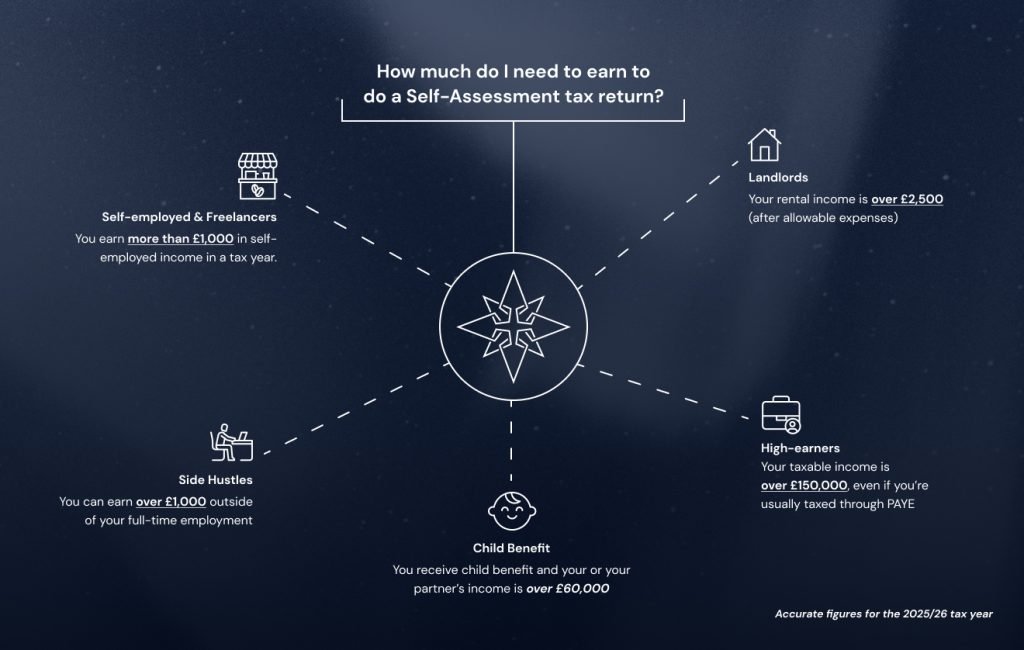
Self-employed people and freelancers
You earn more than £1,000 in self-employed income in a tax year, even if it was part-time or only for a few months. This includes sole traders, contractors, and freelancers.
Landlords
Your rental income is over £2,500 (after allowable expenses). This is the case whether you’re renting out one property or several, and whether it’s a long-term let or occasional income from holiday lets.
High-earners
Your total income is over £150,000, even if you’re usually taxed through PAYE. This often catches people out, especially professionals who assume PAYE means everything’s already sorted.
Receiving child benefit
You receive child benefit and your or your partner’s income is over £60,000. This is when a tax return is usually needed to calculate the High Income Child Benefit Charge.
Side hustles
You earn over £1,000 outside of your full-time employment. This could be from freelance work, online sales, consulting, or any additional income that isn’t taxed through your main job.
Other common scenarios
Sometimes, what you pay tax on and the amount you pay will differ depending on your situation, how much you earn, and if you’re earning any other income. For the most up-to-date figures and information, visit the HMRC website or reach out for tailored advice.
You may also need to file a Self-Assessment if you’ve received:
- Income from savings and investments
- Certain types of pension income
- Foreign earnings
- Director’s income
- Tips from customers
What are the key Self-Assessment deadlines each tax year?
Missing deadlines is where penalties start to creep in, so it’s good to keep your dates balanced.
Here’s the usual Self-Assessment timeline:
- 6 April (previous year) – Start of the tax year
- 5 April – End of the tax year
- 5 October – Register for Self-Assessment
- 31 October – Paper tax return deadline (if used)
- 31 January – Online tax return deadline and tax payment due
- 31 July (following year) – Additional payments deadline, known as payment on account (POA)
How does Making Tax Digital affect the deadlines?
Making Tax Digital (MTD) is HMRC’s long-term plan to modernise the UK tax system and move reporting online. The aim is to reduce errors, improve accuracy, and give taxpayers a better view of their taxes throughout the year (rather than one big surprise in January).
Right now, MTD applies to VAT-registered businesses, but the rules will soon be introduced in phases to self-employed individuals and landlords from 6 April 2026.
This means you’ll need to:
- Keep digital records instead of spreadsheets and sticky notes
- Send quarterly updates to HM Revenue & Customs during the tax year
- Prepare an end-of-year final declaration to confirm your tax position
You won’t have to pay tax more often, but you will need to stay more organised throughout the year.
With the right systems and the right support, MTD can make tax feel more manageable, especially if you’re an “I’ll deal with it later” type of person. And when the time comes for MTD, having an accountant on hand can make the transition much smoother.
Not sure if you need to file? Let’s help you get clear
Moral of the story? Apply for Self-Assessment sooner rather than later. And if you’re unsure, don’t be afraid to seek accountancy support from Polaris. Future you will thank you for it.
We work with you all year round. Not just to populate your records and file year-end accounts, but to help you pay taxes, understand your finances, and build a future you’re proud of. A quick conversation with us can help you confirm if you need to register, avoid unnecessary penalties, protect your finances, and pay the right amount of tax (not a penny less, and certainly not more).
What are you waiting for? Let’s chat taxes.
Frequently asked questions about Self-Assessment tax
Does HMRC remind everyone to file a tax return?
Unfortunately not. HMRC may send out reminders if you’ve filed before, but they don’t often notify new taxpayers. If you start earning additional income, you are responsible for registering, and HMRC will act once they realise you haven’t.
If you’re unsure, you can check guidance on the HMRC website, use online tools, or contact the Self-Assessment helpline by phone.
Will an accountant deal with my Self-Assessment tax return?
Absolutely, and it’s a much easier route for you. We’ll register you for Self-Assessment, complete and submit your tax return, speak to HMRC for you, help you plan ahead and stay compliant, and spot all allowances, reliefs, and refunds you might otherwise miss.